Showing posts with label sanctions. Show all posts

Saturday, May 16, 2026

Joseph Biden Expresses Support For The Iraq War (2003)


Senator Joseph Biden supported the Iraq War. As a ranking member of the Senate Foreign Relations Committee, he pushed the false narrative that the US was enforcing UN resolutions. Senator Joseph Biden was asserting that this was not a war of aggression. The foundation of this argument was the Iraqi Liberation Act of 1998. That legislation was passed into law and was the basis for regime change in Iraq. Joseph Biden's positions explain why he was willing to aid the Russo-Ukraine War and interference in Somalia. As Vice President Joseph Biden was not an advocate for peace. Biden supported the attacks on Libya and arming rebel groups in Syria. When elected to the presidency, much of his positions in foreign policy did not change. Failure to revive the Iran nuclear agreement and the destabilization of Eastern Europe will have lasting consequences. Biden's support of neoconservative foreign policy enabled the rise of  a more vitriolic far-right conservatism. The Bush administration was the major culprit in developing this atmosphere, but it had political centrist Democratic allies. The war was a preemptive strike, yet Senator Biden attempts to frame this as enforcement of UN resolutions. The UN found no weapons of mass destruction and Saddam Hussein did not violate treaties.    

Wednesday, July 23, 2025

European Union Increases Sanctions On Russia


The European Union has placed more sanctions on the Russian Federation. Sanctions have not ended the Russia-Ukraine War. These sanctions are ineffective and are having negative economic effects on EU countries. The increase in fuel prices harms businesses and consumers in Europe. The majority of African and Asian nations are not placing sanctions on the Russian Federation. The reason is due to the fact Russia has better relations with the Global South. Ukraine's war effort is taking a turn for the worst. The exchange of drone warfare and missiles has added to the brutality of the war. Ukraine has hit Moscow with long range missiles and did an incursion into Kursk. At some point, the Ukrainian military will collapse. The conflict is a war of attrition and a proxy operation under the supervision of NATO. Eastern Europe is not only being militarized, but the entire EU. Sanctions only hinder efforts at diplomatic resolution. President of the European Commission Ursula Von Der Leyen proposed  a 131 billion euro defense budget. This is going to paid for by taxing the citizens of the European Union countries. The United Kingdom hold the position of keeping the conflict going. The US has not produced a peace settlement and the majority of talks end in failure. The Istanbul talks are not going to end the conflict as long as sanctions are imposed on Russian energy. Now that President Zelensky is facing internal protests, his political future is uncertain. Protesters were voicing their grievances about government corruption. Even if the war ends the internal situation in Ukraine will be unstable. The EU would probably support an authoritarian Zelensky dictatorship for the sake of undermining the Russian Federation. Belarus could in the future subject to even more sanctions to harm a Russian ally.     

Thursday, April 11, 2024

Zimbabwe's New Currency


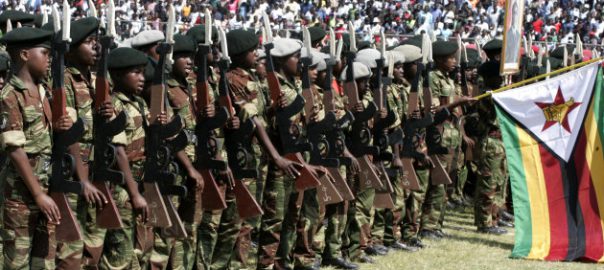
Zimbabwe has introduced a new currency. The Zimbabwe Gold was introduced on April 5th. The motivation is to stop inflation and move away from the US dollar. This also is a way to circumvent sanctions imposed by the European Union and the United States of America. Zimbabwe's condition would improve if there were no attempts at economic warfare. The ZiG as it is known was not the first attempt at a new currency. Six attempts have been made since 2008. The gold currency might have a better chance of survival. Gold is still valuable and having a currency backed by it could  generate trust in the public. The majority of transactions continue to be done in US dollars. The difference now is that Zimbabwe according to its central bank has 2,1 tons of gold. Zimbabwe also contains diamonds. Natural resources are the key to economic stability and development. Getting membership to the New Development Bank could provide further solutions to economic challenges. Further changes have to be made if the multi-currency system is to be discarded. The 2019 ban on foreign currencies as legal tender was designed to challenge foreign influence in Zimbabwe's economic policy. Global market inflation forced Zimbabwe to reverse the policy in 2022. Zimbabwe has been under US sanctions since 2003. The European Council has renewed restrictive measures against Zimbabwe. the claim is that it is a mere arms embargo, but most EU countries do not want to do business with Zimbabwe. The direct development cooperation ceased and that directly effects the people of Zimbabwe. When a country is blacklisted by sanctions this makes other countries hesitant to invest. They fear retaliation from other powers. The world is gradually moving into an era of de-dollarization and Zimbabwe sees this as an opportunity. If the Zimbabwe Gold is successful other African nations might try to replicate a similar economy policy. 

Saturday, May 27, 2023

Germany's Recession


Germany is Europe's largest economy and is now in recession. The concern is that this could be an indication of  a growing economic crisis. The effect could be global and other EU countries could be effected. Output has fallen to 0.3 % in the first quarter of 2023. The aftermath of COVID-19, inflation, and the sanctions on Russia are contributing factors. Manufacturing has seen a slump in Germany. Combined with a decline in retail sales demonstrates consumers have little disposable income. If prices increase for food and fuel, consumers will not spend more.    The recession could last longer than what some economists predict. The European Central Bank has increased interest rates, which has not been done since 2008. This policy will not be a solution to the recession. Even if the sanctions related to fuel were abolished, the damage has been done. Businesses and workers are going to face the majority of hardship. Germany has a 7.2 % inflation rate, which means the average German citizen will struggle to afford certain products. The Bundesbank claims that the economy should recover around April to June. The hope is that industry will see growth, which will counter low consumer spending. Reducing subsidies for hybrid and electric cars was not the best decision for the current quarter. Car production is an essential part of the physical economy and ensures a source of employment. The German auto industry becomes less  competitive without technological innovation. The warning signs of a bigger recession were seen in 2021. According to the Federal Statistical Office ( Destatis ) Germany was  technically in a recession in March of 2021.   

Thursday, February 23, 2023

The Aftermath of The Syria-Turkey Earthquakes


Syria and Turkey have faced a devasting earthquake. The death toll has been estimated as being 47,000. Buildings have been reduced to rubble from the first earthquake on February 6th. The earthquake was at least 6.4 magnitude. The aftermath will be very extensive. Homelessness and crowed hospitals are a common sight. The cost of reconstruction will be high. The need for international aid will become more important. Syria is still under sanctions and there is no plan to lift them. The civil war continues fueled by Western military assistance to various armed groups. More sympathy is given to Turkey and little to Syria in both American and European press. The greater concern for Turkey is because it is a NATO ally. The US, UK, France, and other NATO countries want the removal of Syrian president Bashar al-Assad. Turkey could be blackmailed into accepting Finland and Sweden as NATO members. The refusal to provide assistance to Turley could be used as leverage. A double standard exists in natural disaster relief. President Recep Erdogan's public image has already been effected from the earthquakes. The response has been criticized as ineffective. This will have an impact on the next election. His government prioritized construction and infrastructure projects. Which makes the earthquakes a bigger setback for Turkey's long term modernization. Arab states have provided aid. Saudi Arabia, Egypt, and Bahrain provided aid to Syria. Aid coming from Gulf monarchies seems odd, considering they are actively trying to overthrow the government. Turkey's recovery will take time, but Syria has the challenge of civil war and attempted regime change operations.  

Monday, February 6, 2023

Zimbabwe and Belarus Are Collaborating In The Agricultural Sector


Zimbabwe and Belarus are enhancing economic ties. The agricultural sector will see an increase in collaboration between the two countries. Belarus intends to send more tractors, trucks,  seed drills, and grain harvesters to Zimbabwe. Belarus also wants to extend diplomatic relations. The reason for this is due to the fact the two nations face sanctions from European countries. Belarus has become more isolated over the years in Europe. The only reliable ally in Europe for Belarus is Russia. Looking to nations out of Europe ensures that the country will not be a victim of economic warfare. Zimbabwe has been able to resist decades of sanctions. Since 2000, there has been an effort to get land back into the hands of Africans in Zimbabwe. White farmers under white  minority rule stole the wealth of the Zimbabweans. Gaining equipment and training a new generation of framers has significant benefit. Land reform and increase in exports will improve Zimbabwe's economic situation. Through agriculture Zimbabwe can increase food security and ensure stable employment levels. The collaboration began  around 2020. A new approach is being taken with Zimbabwe. Open dialogue and mutually beneficial economic agreements is the best form of diplomacy. The EU continues to isolate Zimbabwe and Belarus. As a result many countries are missing economic opportunities who favor sanctions on these nations. If all the terms of the agreements are met, Zimbabwe could see immense growth in its agricultural sector.      

Sunday, May 29, 2022

The African Union Demands The End of Sanctions on Zimbabwe


Moussa Faki Mahamat (chairperson of the AU commission) and President Emmerson Mnangagwa 

The African Union has demanded an end to sanctions on Zimbabwe. This position has been expressed by AU commission chairperson Moussa Faki Mahmat and AU chairperson Macky Sall. The sanctions by the West have been in place for 20 years. Macky Sall delivered a speech during the African Union humanitarian summit. This was part of the AU Extraordinary Summit. The summits discussed many concerns related to food security, terrorism, coups, and climate change. Zimbabwe has been subject to unfair treatment from the United Kingdom and the United States. The sanctions are not about human rights concerns, but a meticulous use of economic warfare. Harm to the economic health of the country is an attack on the people, rather than the leaders. Criticisms or condemnation of President Emmerson Mnangagwa is legitimate. Attacking the entire population is not justified. Zimbabwe has a similar situation just like Cuba. The West attempts to induce  some form of regime change by damaging a nation's economy. The African Union by refusing to support sanctions, demonstrates its taking a more assertive stance  with Europe. Other African nations are willing to still have relations with Zimbabwe no matter what the reaction could be from EU countries. African nations  have decided to help one another in times of economic hardship.  Macky Sall, who is president of Senegal stated his country will donate three million dollars for humanitarian aid on the continent. Cooperation must continue to maintain prosperous and stable states in Africa. Fighting the sanctions against Zimbabwe might act as a unifying force across the continent.   


Sunday, February 21, 2021

The European Union Renews Arms Embargo Against Zimbabwe


The European Union has renewed  the arms embargo against Zimbabwe. Sanctions still remain in place. The claim is related to the country's human rights situation, but other African nations that favor EU policies are exempt.  While sanctions against  government officials can be justified, economic warfare against the population is not. The UK is the most vocal in keeping sanctions. The reason is not out of the concern for human rights, rather to have influence over a former colony. There was little condemnation with the military coup in 2017 that ended the Robert Mugabe presidency. The reason was due to the idea that President Emmerson Mnangawa  would be more accommodating to EU foreign policy objectives. His  repression became more apparent with the imprisonment of journalists and opposition figures. Zimbabwe internal politics need reform, but it should not be directed by external foreign entities . The African Union can be a place of dialogue and regulation of arms being imported into Africa. The global arms trade is a challenge to stability because it aids in the continuation of various conflicts. This arms embargo is not designed to stop some form of military aggression or protect the public from a coup. Zimbabwe may be gradually weakened for future regime change. Whatever the true intention is Zimbabweans still live under unfavorable conditions.