Civilization and society has undergone radical transformation during the course of human history. The world changed from hunter gatherer societies to modern nation-states. There is a common conviction that the status of the human condition is improving. Some observers have even proclaimed this is the most peaceful era in history. This seems more to be a falsehood as there are more challenges confronting the world. The increase of ethnic, racial, and religious conflict has been exacerbated by political and economic events. Scientific advancement and technology has caused unintended consequences. The belief that stable communities can be formed has become unattainable. The lugubrious state of affairs demonstrate that the world can be made into something better is a fabrication. When the word progress is used to describe changes in human societies there is the implication that political, economic,and social conditions have improved. These comparisons of past and present are not evidence of an emerging golden age. There has been a shared concept among some scholars and observers that particular world problems of war, famine, disease, and human rights abuse would be relics of the past. This misguided vision bordering on utopian fantasy fails to realize history follows cycles of conflict and stable established order. States have been formed through warfare and geopolitical maneuvering from the ancient world to present. The prevalence of democracy, capitalism, and supranationalism has not produced the type of world leaders and political science intellectuals had hoped for. The end of World War II and the Cold War there was a feeling that the world would become more unified under a banner of peace, cooperation, and a sense of universal justice. The result was a world with more geopolitical complexities and a reaction to an imposed globalism which has both economic as well as cultural aspects. The same issues still plague humanity as they did in the past : war, economic instability, racism, and lack of food security. New problems also exacerbate the old ones which range from environmental destruction, the abuse of technology, and the consequences of overpopulation. The world has changed, but the current developments are not paradigms of progress. The myth of progress emerged from the idea that the future would be a spectacular apex in the development of humankind. This vision has been slowly disintegrating under the pressure of rapid urbanization, political shifts, and sociocultural change.
The major shift in human history was the change from hunter gatherer societies to permanent settlement. Normally,scholars cite this development as a positive change for humanity mastering agriculture, domestication of animals, and the rise of cities. There were certain consequences that occurred that are still present in the contemporary time period. Property became a mark of status and power. The class divide began with those who owned land and farming settlements. Those who were still hunting and gathering were at a disadvantage. The permanent settlements became powerful by generating surpluses which gradually led to the exchange of goods and services through currency. Prior to uniform currency, societies functioned on a system of bartering.

The group with the most resources would have more influence and control compared to those living in a nomadic lifestyle. This change that occurred also altered the nature of gender relations. During the hunter gatherer stage of humanity men and women had an equal status. The rise of property and permanent settlement saw a sharp increase in society based around patriarchy. Men would have control of land and property with only rare occasions in which women were able to have access and own some. Men were groomed and encouraged to be leaders of society, while women were regulated to a solely domestic function. Homo sapiens emerged around 50,000 B.C.E, but the Paleolithic and Neolithic Ages would redirect human history. The Paleolithic Age saw humanity make use of stone tools known as eoliths. While the crafting of tools became pivotal for survival it would have larger repercussions in the distant future. Microliths were the precursor to technological miniaturization. These flints were specialized for various uses. The Neolithic Age was the period in which humanity was able to control its food production. The peoples of the Fertile Crescent which was located in what is now the eastern Mediterranean and part of the Persian Gulf saw the domestication of animals. Dogs and cattle would become essential to agriculture projects in the region. This was preliterate society. Writings were not present during this period. The Neolithic Revolution began around 8000 B.C.E and what has been uncovered by archaeology was that there was an early system of social stratification emerging. Catul Huyuk provides evidence of what preliterate society would have been like during the Agricultural Revolution in 6000 B.C.E. There is a position that speculates that preliterate societies in the region were governed by a council of elders and all male assemblies contributed to decisions involving war or selecting a chief. It would be difficult to argue that the system was democratic seeing as women had little or no participation. The establishment of centralized government would cause problems between the governed and the leadership.

The Agricultural Revolution has been seen as a form of progress by scholars of history. This shift to agriculture happened all around the world at different time periods. Humanity was able to feed itself for 2.5 million years, however this change had unintended consequences. The diet of humanity got worse and it further induced a wider gap among social classes. It caused population explosions that many societies had to deal with in a particular manner.The farmer became a privileged elite. Wheat and grains became symbols of power and prestige. This inevitably caused conflict between foragers and farmers for domination of land as well as plant resources. The foragers and the few remaining hunter gatherers fought a losing battle against the rise of the permanent village. Agriculture did not provide absolute food security. Crop failures could mean starvation for those reliant on subsistence agriculture. Framers were not more food secure than hunter gatherers or foragers.

Agricultural revolutions thus spread across the world. It has been theorized that more areas could have had agricultural revolution, but archaeology has yet to prove there was more. Africa (3000 B.C.E),East Asia ( 7000 B.C.E), Oceania (6000 B.C.E), North America ( 2000 B.C.E), Central America ( 4500 B.C.E), and South America ( 3500 B.C.E) saw transformation from the introduction of agriculture. Societies would thus be modeled on a pyramid structure with monarchs at the top, a warrior class, and a religious order. What started with permanent settlements gradually transformed into villages and then towns. Cities emerged when populations increased in a certain area. Large populations required a different type of governing and political system.
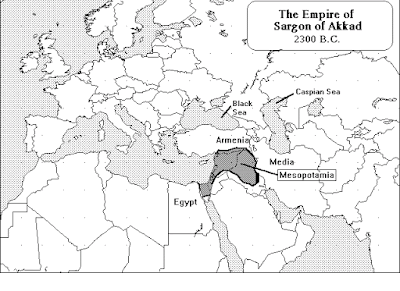
The rise of cities allowed for the conception of empire. Sargon of Akkad was considered to be the world's first large empire builder in ancient civilization. What fallowed was a dangerous path to permanent conflict. Soon every continent would have large empires. Rome, Egypt, Nubia, Kush China, and Mesoamerican civilizations came into existence getting larger through conquest. While these empires of Africa, Asia, the Americas, and Europe were different they had one common trait. Imperial ambition and war were the foundations of these states. Ancient imperialism denied many people freedom if they had the misfortune of being conquered. There were cases in which areas would just merely have to pay tribute rather than face complete subjugation. The Roman Empire had to do this to a degree to prevent mass insurrection. Particular negotiations had to be conducted to maintain vast amounts of territory. Ancient imperialism functioned around a city growing or region in power and then expanding beyond certain borders. A series of wars would be fought till it reached an immense geographic size. Decline would follow from either military defeat, internal political problems, or being conquered by a stronger power. The Mauryan Empire fell into gradual decline after Emperor Ashoka. The Roman Empire split into a eastern and western section. Rome faced attacks from Lombards, Goths, Visigoths, and various Germanic tribes contributing to its decline.
Warfare was not seen a something negative, rather a common part of state affairs. This did not mean that peace was completely rejected when an empire reached its apex. Such projects required a level of collaboration and powerful leaders. The ancient imperial projects could only function under a monarchy or emperor as the governing authority. Monarchy has been the oldest form of government. Democracy can trace its origins to Athens around 508 B.C.E being more direct in political function. All citizens had the right to come and address the Assembly. This was not truly rule by the people rather the nobles had control through their own council known as Areopagus. Athens was a city-state in classical Greece that was a rare exception. All over the world there were empires located near river systems governed by monarchs along with a ruling class. If such democratic systems been in place, ancient empire may not have expanded in the way that they did. The ancient and classical empires did leave behind impressive structures, ideas, and knowledge yet it should be understood it came at a cost. The progress that scholars cite came at the expense of the lower classes and subject peoples.

Empire building began to spread across the globe with numerous states appearing in Africa, Asia, and South America. There has been a common conviction among scholars of history that empire works seeing as it is a consistent theme that appears in world history. The British Empire has been discussed with nostalgic endearment. This emotion ignores that it was at least until World War II the most oppressive force in the international landscape. Contrary to popular belief empire and imperialism are not sustainable systems. They brought much violence, disorder, and fear to the victims of an empire's might. While the process was violent, at times it required collaboration from subject peoples. The Roman Empire would not have lasted long if it did not have willing cooperation from other groups that it conquered. The British Empire used a method of indirect rule with some of its colonies. India was a colony that required alliances with local leaders to assist British control of a vast subcontinent. Such control mechanisms require that particular groups are in confrontation with one another so they cannot united to free themselves from an empire. Belgians did this in Rwanda and the Congo realizing that Hutu and Tutsi conflict would work to their advantage. While empires can be oppressive to numerous ethnic groups or the entire population chaos follows with collapse. New states emerge and old hostilities carry over. The end of the Roman Empire gave rise to numerous tribes that attacked it to change the political landscape. What emerged was the Byzantine Empire and the Holy Roman Empire, which were successors to Rome. Europe was in a period of the Dark Ages in which there was little advancement in the arts, sciences, or culture. African and Asian civilizations were not experiencing in their societies. As time passed, the European empire gained an advantage in science and technology. The Enlightenment and the Age of Exploration propelled Europe into a leading position among the nations of Earth.
 |
| The territories of the British Empire are in pink. This was the extent of its influence that ranged from Africa to Asia and areas in North America. |
There will always be conflict when empire emerges. The British, French, Germans, and Italians competed for colonies and influence around the world. Spain and Portugal were the main competitors in global influence during the Age of Exploration. These two powers were later surpassed by France and the UK. During the 19th century Germany and Italy became unified states changing the balance of power in Europe. It was only a matter of time before mass global conflict broke out. World War I lasted from 1914 to 1918 leaving Europe devastated and new countries forming out of that conflict. There was not satisfaction or clam, rather more political complexities in eastern and central Europe. Britain and France divided new territories among themselves under the mandate system. The collapse of the Austro-Hungarian, German, Russian, and Ottoman Empire caused a mixture of ethnic violence and confusion. The modern Turkish state made it clear that Greeks, Armenians, Kurds, and Jews were not going to be part of the national project. What drove empire was economic and political factors. It was a lucrative enterprise and it created a sense of unity among the mother countries. When empire collapses, there still remains the practice of international power politics in which various states compete with each other for economic,political, and cultural influence of the world. Neocolonialism is merely the product of a lost era in which certain nations could be aggressive and dominate countries which could not resist. The idea that empire works seems to lack cogency, considering the number of empires that have disappeared or have left instability in multiple regions of the globe.
The persistence of warfare around the world demonstrates that humanity has not made progress. Warfare may have even been part of early hunter-gatherer societies and became more a common activity with the rise of property ownership as well as permanent settlement. When the idea of permanent states developed along with more centralized governments, armies were needed to defend borders. Conflict was inevitable with these historical developments. The building of empires was not a peaceful activity. It involved subjugation of various people by armed violence. They only way this was kept under control was through international law and a modern system of treaties. Prior to World War I, there were the Hague Conventions building the groundwork for modern international law, rules of warfare, and early system of supranationalism. After the Great War, the League of Nations was formed as an international body to promote peace and enforce international law. This body was not able to deal with the British Empire and France in regards to their abuses under the mandate system. It was unable to thwart the growing threat of Fascism or a more aggressive Japanese Empire. Low scale conflict finally merged into a larger one by 1939. With the defeat of Fascism in World War II the United Nations was formed to ensure that mass global conflict would never happen. However, conflict did not stop. The Cold War and decolonization became major sources of discord. The Korean War, the Vietnam War, and the Israeli-Palestinian conflict were causing much humanitarian crisis and erratic changes in both Asia as will as the Middle East. France and Britain were still unwilling to give their colonies independence and some had to get their freedom by armed force. Burma, Algeria, Vietnam, Zimbabwe, and South Africa had to fight armed struggles to remove their former imperial masters. The South African region was in long term conflict from the Rhodesian Bush War to the anti-apartheid armed struggle. When all these decolonization movements were occurring, the US and Russia were engaging in wars of proxy with one another getting more involved in the Third World. Wars were happening all over the globe in the 20th century and will still continue. The end of the Cold War did not bring lasting peace or stability. It formed a world in which US power when unchecked. Nations were subject to the whims of US power, but it seems that multipolarity is challenging that concept. The potential for conflict grows greater with Russia and China as long as US foreign policy attempts to antagonize these countries.
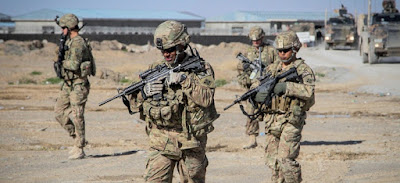
The world powers need a system of peace for the sake of security. Yet, there remains too much profit in warfare. The military industrial complex has become an essential part of the economies of France, the US, UK, and Germany. Arms manufacturers have significant investment in seeing global conflicts continue. There may also be a more lugubrious reality in which the majority does not want peace. The democratic western societies have attacked states in the developing world. The arguments used are either based on humanitarian intervention or a national security measure. These states have smaller armed, no nuclear arsenals, and have less wealth yet are presented as dangerous threats. Iran and North Korea could not defeat America, France, or the UK in armed conflict. The motivations are different than what the citizens of the developed nations are thought to believe. War provides a perfect distraction from domestic problems such as economic weakness, crime, or corruption in the political system. During times of war, the public is more united in fighting a common enemy. When politicians of the liberal democracies have failed to provide solutions to growing domestic challenges, there is an attempt to scapegoat a particular group or people. Despite the political conditions of a certain era, warfare has been a reoccurring part of human history. Many cultures and people around the world have had a tradition of warrior societies. Dahomey, Japan, and Sparta are a few examples of strict and regimented warrior cultures. As long as states and governments exist, there will be no peace on Earth. Humanity has a bullying and violent nature that has yet to be overcome. The reason why the peace movement or pacifism in general will not become a large force is that is against the public's instincts to support such ideas. The only time people en mass repudiate war is when their country begins to lose. When there is nothing but triumph, then nationalist fervor cannot be contained. Ethical questions are not as important as strategic ones. Warfare has throughout history been an instrument to gain or expand power. Warfare's intrusion into multiple regions only makes the situation more precarious making it easier for conflicts to merge.
The myth of human progress also can be seen in the idea that this is a more tolerant era. Racism, sexism, class conflict, religious persecution, and homophobia as some claim is not as awful as it was in the past. While this is a statement of fact, that does not mean these ills have disappeared. There are certain cases in which as been on the rise in response to economic and political factors.Besides current developments, prejudice can be present in societies for long periods of time. The contemporary era shows that people have more contact with various cultures, races, and religions yet this does not terminate extreme ethnic conflict. This does not prevent discrimination or persecution in nations around the globe. China continues to treats its Tibetan and Uyighur population as second class citizens. The United States not only is going through a phase in which white supremacy is seen as acceptable, other groups are targeted. Islamophobia and anti-immigrant sentiment has been spreading on both side of the Atlantic. Russia has undergone a nationalist revival in response to a NATO build up. As a result non-Slavic peoples are viewed with suspicion. All around the world there seems to be ethnic conflict or some for of racism or persecution. The threat of genocide become more a possibility under a world in constant warfare. Xenophobic nativist nationalism has become a popular movement among the far-right and politicians in power to remake their nations into a homogeneous unit. The idea that globalization brings about tolerance or a greater understanding seems misguided. To an extent it enables cultural imperialism. Western culture has become more accessible and attractive to youth of the developing world. With its ubiquitous nature, the local culture seems to be either eroded or will be phased out as time goes by. There is not merely acculturation. There is a desire to have all nations westernize and simultaneously abandon what makes them culturally distinct. Such ideas are promoted by supporters of supranationalism and a globalist political philosophy. The hidden ethnocentrism of the countries of Europe are demonstrated in their behavior relative to foreign policy. They blame a country's lack of development on the fact they do not westernize. Ignoring the legacy of empire or the impact of neocolonialism only shows that racist ideology has not dissipated.

More and more the people of the world have become extremely tribal in their thinking. Economic and social tensions are only exacerbating intolerance. Fear of demographic shift has driven voters in democratic societies to vote for people with authoritarian tendencies. Hatred does not just involve skin color it also includes political affiliation or culture. Religious fundamentalism continues to exist even when people live in a society of science in technology. Fanatic Christians, Muslims, and Jews justify their abuse or violence against people on the basis of their religion. Zionism and Islamism have generated both religious and ethnic hatred in the Middle East. The Christian right in the United States actively undermines women's reproductive rights. Organized religion and its hold over large numbers of people is not a sign of progress. There have been multiple times in history in which religious fanatics were involved in persecution or elimination of individuals who dared question the Church. If it were not for the Enlightenment, such behavior and legal codes would have continued. Extremists of this sort are so intolerant other religions they see as illegitimate. With wider conflicts occurring across the Asian and African continent, the world is far from being tolerant. If there was to be substantial change, attitudes must be altered. Tolerance may not be enough. Acceptance should be the goal with the understanding that different groups of people have the same rights and deserve equal treatment. Many observers have made the argument that under democratic political systems, such ills of hatred and prejudice can be countered.
Liberal democracy or capitalism cannot be considered a measure of progress. Although state formation and building a political structure has always been an experiment it has not resulted in better lives for the people living in such states. This is not to say that an authoritarian or totalitarian government is a reasonable alternative. Communism attempted to challenge the capitalist system and there remains some active socialist organizations. However, it has not become a major political force. The only attribute about liberal democracy and capitalism is it can survive. Other than that, it cannot meet the needs of the people. The illusion of freedom is that people have a choice in such political structures. The pyramid structure that has existed since civilization's origins still negates the powerless majority. Voting or non-conventional participation can only do so much to negate the power of a ruling class. Corporations, lobby groups, and political action committees have more influence over elected officials than the average voter. The parliamentary and presidential systems could potentially fail by not addressing growing income inequality and the destabilization brought about by neoliberal capitalist policy. Democracy has a flawed system. It requires that all citizens participate, have equal access to that system, and that they have the ability to make informed decisions. The governments and citizens of the UK, France, Germany, and the United States fail to meet these requirements, which explain the current turmoil seen in those countries. There are nations that may have the structures of democratic government, yet behave in an authoritarian manner. Having the presence of multiple parties does not ensure a fair political system or an efficient one.

India and Pakistan have to struggle navigating a multiparty system combined with both regional and ethnic complications. The end of the 20th century did not usher in an era of greater human freedom, rather a system of illiberal democracy. The oldest form of government was monarchy . That system was dominant up until the late 19th century to early 20th century. From the ancient world up to the early 20th century a political scientist may have believed that monarchy would be the only political system that humanity would adopt. An assumption like that would be incorrect. Certain political systems have not been experiment with. New ideologies emerge challenging the political consensus and order. There has been the possibility of revolution that will dramatically change the cultural and political environment of a nation. Liberal democracy is nothing more than another political experiment that will not last forever. By nature it can be unstable and erratic. Capitalism puts emphasis on free markets and private enterprise. Supporters claim it can create prosperity and reduce poverty. It does create prosperity, yet not for the whole of the population. The ruling elite benefit the most while labor is exploited for the sole purpose of profit maximization. The developed world has witness a phenomenon of stagnant wages, fiscal austerity, and even longer working hours. The middle class and poor are forced to pay more in taxes in a supply side economic system, which has created growing tension. There are very few foundations for personal economic security. There can be a chance that a person could fall into poverty by no fault of their own. Economic and political systems should not be used as an indication of human advancement. No matter what political or economic model poverty and war still persist.
Science and its application has often been referenced as evidence of human progress. Applied science has produced many marvels. Biomedical and health science has combated disease as well as increased average life expectancy. The telephone and the internet make communication around the world far more simple. Space exploration opens up doors to places never thought to exist. Technology has to an extent improved lives. It can be abused depending on how it is utilized. Nuclear weapons and their proliferation cause concern. The trepidation comes from the chance humanity's destruction will come at its own error.

This was not the only technological advancement that shocked the world. Airplanes, tanks, and drones changed centuries of military tactics with their introduction. Warfare became more lethal. Technology and science have been viewed with a level of caution and fear. The unintended consequence of technological development was harm to the environment. Pollution, the burning of coal, and masses of waste have cause permanent damage to the Earth. The world's population grows and the more it consumes. Electronic and plastic wage has become harder to dispose of. Climate change also poses a threat to the safety of the world population. Higher carbon dioxide levels from fossil fuel use and automobile transportation exacerbate green house effect. The increased temperature causes the polar ice caps to melt gradually. The sea levels rise increasing the likelihood of flooding. The Earth's climate has changed throughout geological history, but this is the first time in which people contributed to this rapid shift. The industrial revolution transformed the environment of the world. Factories and machine power would soon replace manual labor. The world became more reliant on fossil fuels such as coal and oil. This desire for and intense consumption of fossil fuels devastated both land and sea. Besides what humanity has done to its environment, it is may be doing something similar with the body. Genetic engineering and transhumanism are no longer science fiction. Last year the fist gene edited babies were born and it is not unheard of to seeing genetically modified organisms in supermarkets. Human beings have the ability to alter themselves biologically. If there is limited regulation or laws regarding this new scientific knowledge could be misused. Information technology has become a part of daily life. So much so, that privacy may be a relic of the past. Data protection and identity theft are becoming large concerns on social media platforms. The collection of data and surveillance by either governments or corporations violates privacy and civil liberties. Science and technology will continue to evolve, however it is pivotal that it must be used responsibly. Technology did not make the human condition easier; it may have added more issues.
Human history has reached a stage in which more people live in cities, use technology, and live under some version of liberal democracy. There is the tendency to say that the current period is much better compared to the past. Progress has in this perspective a logical conclusion. The definition used in this context means that society and the human condition can improve for the better. The myth of human progress is that someday civilization will reach a level in which war, poverty, and oppression disappear. This utopian ideal does not acknowledge that history does not follow a direct line of advancement. Large empires and states have appear then vanished leaving behind artifacts of their golden age. There could be social, political, and economic progression yet this could all be eradicated with a change in regime or circumstance. The African, South American, and Asian nations have long histories of civilizations and empires. When the industrial revolution and the advances in modern science passed them by, they became colonized. Ethiopia and Japan managed to avoid this fate by making efforts to modernize and build an industrial capacity. The former colonized countries are now trying to reach a level prior to European contact. The march of humankind seems to be a never ending struggle. There are cycles and parallels of both improvement then reversal. Civilization could completely collapse if pressing global issues are not addressed. A permanent state of warfare, climate change, and societal upheaval could eradicate the world's population. Making these assessments is not an embrace of a cynical world view. Having realistic proposals and strategies will allow for an actual solution to current and future challenges. As long as the myth of human progress continues to dominate international affairs circles and the general public, humanity will be trapped repeating the same mistakes.
Further Reading
Harari, Yuval. Sapiens A Brief History of Humankind. New York : Harper Collins, 2015.
Wright, Thomas. Technology. Tinley Park IL : Good-Willcox Company, 2008.
Woolf, Alex. A History of the World. London : Arcturus, 2016.


